How Long Barefoot Shoes Actually Take to Break In (It's Longer Than You Think)
Quick Answer: Full adaptation to barefoot shoes takes 8 to 12 weeks of gradual wear, not the 2-3 days sneakers need. Your feet are rebuilding intrinsic muscle and connective tissue, not just breaking in fabric.
You bought barefoot shoes expecting a slightly different sneaker. Two weeks in, your calves ache and your arches feel strange, so you assume they don’t work for you. They’re actually working exactly as intended — you’re just in week 2 of a 12-week process.
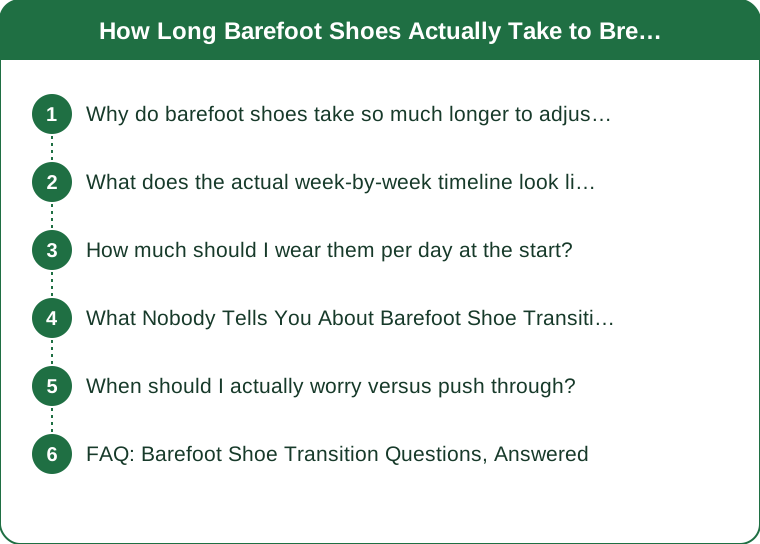
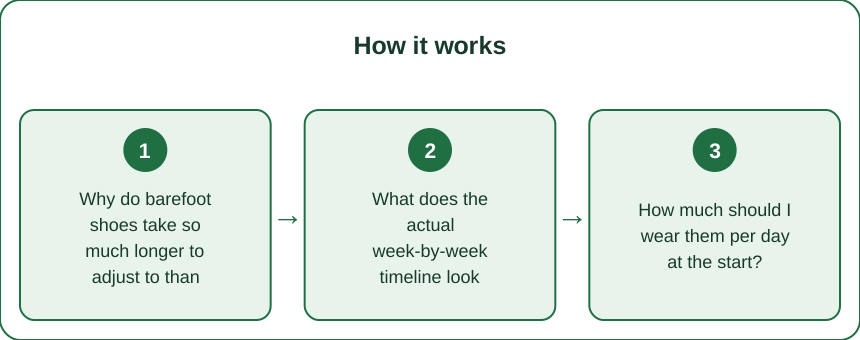
Why do barefoot shoes take so much longer to adjust to than regular shoes?
Because a cushioned sneaker doesn’t ask anything of your foot muscles — it does the shock absorption for you. Barefoot shoes remove that crutch, and your intrinsic foot muscles, arches, and calves have to rebuild strength and range they may not have used in years.
That’s tissue adaptation, not fabric break-in, and tissue adaptation runs on a biological timeline measured in weeks, not days.
What does the actual week-by-week timeline look like?
Weeks 1-2: short wears only (1-2 hours), mild calf and arch soreness is normal. Weeks 3-6: extend to half-days, soreness should be decreasing, not increasing. Weeks 7-12: full-day wear becomes comfortable, foot strength noticeably improved.
If soreness is increasing past week 4 instead of fading, that’s a sign to slow down the ramp, not push through it.
How much should I wear them per day at the start?
Start with 1-2 hours daily, ideally on varied but forgiving terrain, and add 15-20 minutes per week rather than jumping straight to all-day wear. Rushing this is the single most common reason people abandon barefoot shoes as ‘not for them.’

What Nobody Tells You About Barefoot Shoe Transitions
Nobody tells you that your gait will change before it improves — many people develop a slightly awkward, overly cautious stride in week 2-3 as their brain relearns foot placement without cushioning to fall back on.
Nobody tells you that calf soreness is often more intense than foot soreness, because a wider natural stride and more ground-feel recruits calf muscles that sneakers had quietly been doing for you.
And nobody tells you the third surprise: your shoe size may need to go up, since barefoot shoes have a wider toe box and your true forefoot width shows up once nothing’s compressing it.
When should I actually worry versus push through?
Mild muscle soreness = normal adaptation. Sharp joint pain, top-of-foot pain, or pain that doesn’t fade after a rest day = stop and scale back the ramp, or check with a professional if it persists past a week. This is general information, not medical advice.
FAQ: Barefoot Shoe Transition Questions, Answered
Can I skip straight to running in barefoot shoes?
No — walking adaptation should come first. Most guides recommend 4-6 weeks of walking-only before introducing any running in barefoot shoes.
Will the soreness ever fully go away?
Yes, for the vast majority of people, once foot and calf strength catches up — typically by week 8-12 the shoes feel like a natural default, not a workout.
Is it normal to alternate with regular shoes during the transition?
Yes, and recommended — alternating days lets tissue recover while still making steady adaptation progress.
TL;DR:
- Full adaptation takes 8-12 weeks, not days — you’re rebuilding tissue, not breaking in fabric
- Start at 1-2 hours daily, add 15-20 minutes per week
- Calf soreness is often stronger than foot soreness — that’s normal
- Sharp joint pain or non-fading pain means slow down, this isn’t medical advice
Give it the full 12 weeks before judging whether barefoot shoes work for you — most people who quit at week 2 were right on schedule, not failing.
Keep Reading
This article is for general informational purposes only and is not medical advice. Always consult a qualified health professional for guidance specific to you.