Barefoot Shoes and Knee Pain: What the Research Actually Says
Quick Answer: Some research suggests barefoot and minimalist shoes may reduce knee joint loading compared to cushioned running shoes, since they encourage a different landing pattern — but that benefit only shows up with a proper, gradual transition. Rushing the switch is a common cause of new knee pain, not the shoes themselves.
Your knees felt fine in cushioned trainers for years. Three weeks into barefoot shoes, they don’t, and you’re not sure if that’s the transition working as intended or a warning sign.

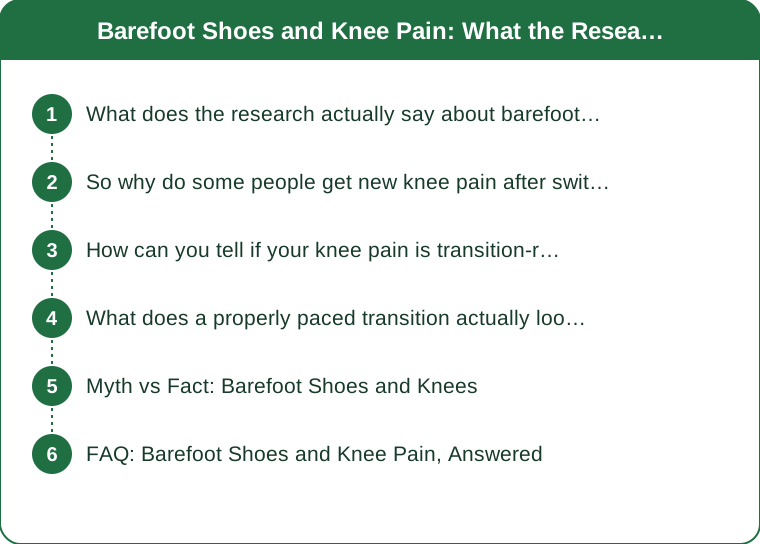
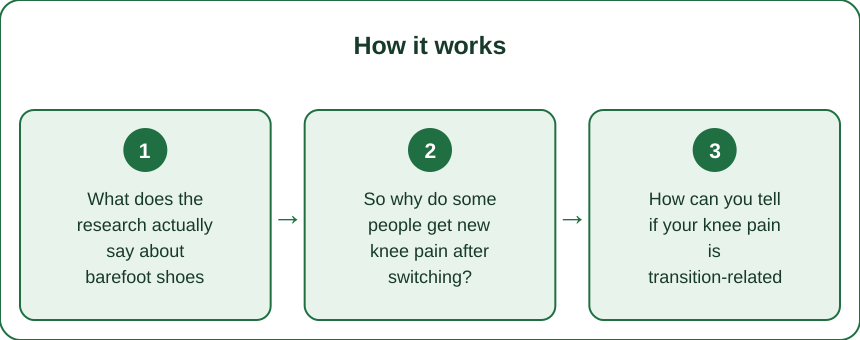
What does the research actually say about barefoot shoes and knee load?
Several biomechanics studies have found that barefoot and minimalist footwear tend to encourage a forefoot or midfoot strike instead of a heel strike, which can reduce the impact force transmitted up through the knee joint on each step. Some studies specifically link cushioned heel-striking to higher knee joint loading rates compared to a more natural midfoot landing.
That said, this isn’t a universal, guaranteed outcome — the research is mixed on long-term injury rates, and individual biomechanics, running form, and transition speed all affect the actual result for any one person.
So why do some people get new knee pain after switching?
The most common explanation isn’t the shoes themselves, but transitioning too fast — asking calves, feet, and ankles that are used to cushioning and support to suddenly do more work, which can shift extra load onto the knee if your form hasn’t adapted yet. New pain in the first few weeks is a signal to slow down, not necessarily a sign the shoes are wrong for you.
Poor running form carried over from cushioned shoes (like continuing to heel-strike hard in a barefoot shoe) can also create knee stress that a proper form adjustment would resolve.
How can you tell if your knee pain is transition-related or a real problem?
Transition-related discomfort tends to be mild, improves with rest, and gradually decreases week over week as your body adapts. Concerning pain is sharp, localized to one specific spot, worsens with continued use, or comes with swelling, and it deserves a pause and a check-in with a doctor or physical therapist rather than pushing through.
As a general guideline, if knee pain hasn’t started improving within 1-2 weeks of reducing your barefoot shoe mileage, it’s worth getting evaluated rather than assuming it will resolve on its own.

What does a properly paced transition actually look like?
Most guidance suggests starting with short walking sessions, not runs, for the first 1-2 weeks, then adding brief run intervals only once walking feels completely comfortable. A common pattern is starting with 10-15 minutes of barefoot shoe activity every other day and increasing by no more than 10% per week.
Running form cues matter too — landing softer, taking shorter strides, and increasing cadence slightly can all reduce knee stress during the adjustment period.
Myth vs Fact: Barefoot Shoes and Knees
Myth: Barefoot shoes are universally better for your knees. Fact: The research shows a potential benefit tied to landing pattern changes, not a guarantee — people with certain knee conditions or biomechanics may not see the same benefit, or could even feel worse.
Myth: Any knee pain during transition means you should quit. Fact: Mild, improving discomfort during a gradual transition is common and expected; the exception is sharp or worsening pain, which does warrant stopping and getting checked.
FAQ: Barefoot Shoes and Knee Pain, Answered
How long is a safe transition period for barefoot shoes?
Most sources recommend 6-12 weeks of gradual mileage increase, though this varies by individual starting fitness and how much barefoot-style activity you’re already doing.
Should I see a doctor before starting barefoot shoes if I have existing knee issues?
Yes — if you have a diagnosed knee condition, a conversation with your doctor or physical therapist before starting is a reasonable precaution.
Can barefoot shoes actually fix existing knee pain from heel-striking?
Some people report improvement after a gradual transition and form changes, but this isn’t guaranteed for everyone, and it shouldn’t replace proper diagnosis of an existing knee issue.
Should I alternate between barefoot and cushioned shoes during the transition?
Many people find alternating helpful early on, using barefoot shoes for shorter walks and cushioned shoes for longer distances, gradually shifting the balance as their feet, calves, and knees adapt over several weeks.
TL;DR:
- Some research links barefoot shoes to reduced knee loading through a changed landing pattern
- Most new knee pain during transition comes from moving too fast, not the shoes themselves
- Mild, improving discomfort is normal; sharp or worsening pain is not and needs evaluation
- A gradual 6-12 week transition with short sessions is the safest approach
This is general information, not medical advice — talk to a doctor or physical therapist if knee pain persists or worsens.
Keep Reading
This article is for general informational purposes only and is not medical advice. Always consult a qualified health professional for guidance specific to you.