Do Barefoot Shoes Really Mean No Arch Support At All?
Quick Answer: Barefoot shoes intentionally remove built-in structural arch support so your foot’s own muscles do that job instead — this isn’t ‘no support,’ it’s a shift from external support to training your foot to support itself, which requires a genuine transition period.
The idea of zero arch support sounds risky, especially if you’ve worn structured shoes your whole life. The actual mechanism is less alarming than it sounds, but the transition matters a lot.

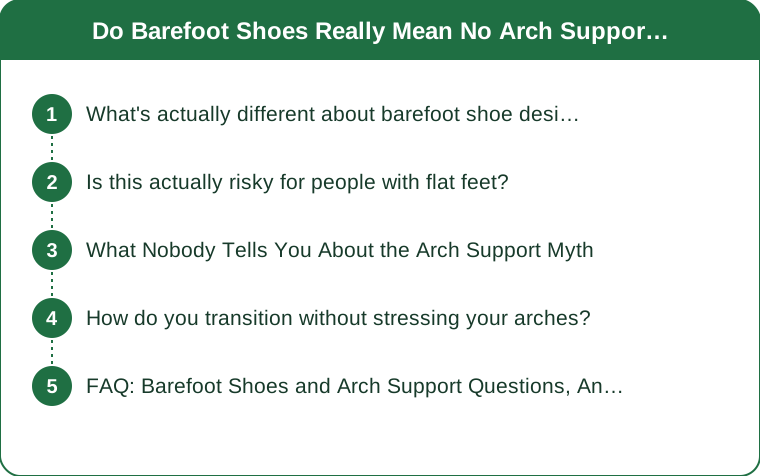
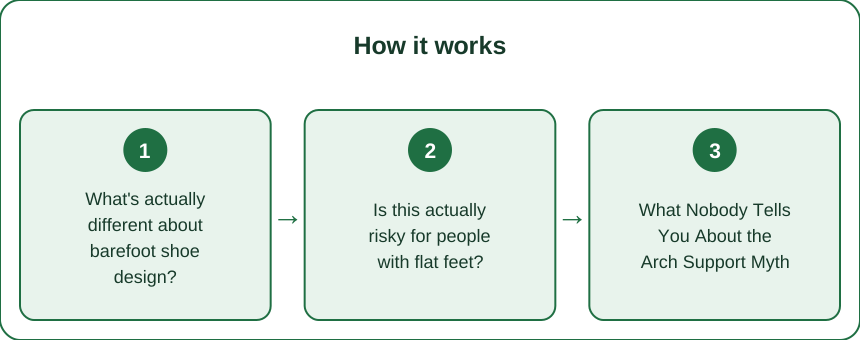
What’s actually different about barefoot shoe design?
Traditional shoes use rigid arch supports and cushioned midsoles to do the stabilizing work for your foot. Barefoot shoes remove that structure so the intrinsic foot muscles (small stabilizers along your arch) have to activate and do that job themselves.
This is why barefoot shoe transitions often come with mild foot fatigue early on — you’re asking dormant muscles to suddenly work, similar to soreness from any new exercise.
Is this actually risky for people with flat feet?
It depends on the cause. People with flexible flat feet (arches that appear with non-weight-bearing but flatten under load) sometimes strengthen their arch musculature over a gradual barefoot transition, improving functional support over time.
People with rigid flat feet or structural conditions should transition more cautiously and involve a podiatrist, since the underlying mechanics differ and forcing a fast transition can aggravate existing issues.

What Nobody Tells You About the Arch Support Myth
‘No support’ doesn’t mean ‘no stability’ — many barefoot shoes still have a wide, stable base and firm ground contact that provides proprioceptive feedback, which is itself a form of stability, just achieved differently than a rigid arch shelf.
Also underrated: the transition timeline is the actual risk factor, not the shoe design itself — most barefoot shoe injuries come from switching too fast, not from the minimalist design being inherently unsafe.
How do you transition without stressing your arches?
Start with short wear periods (1-2 hours) and increase gradually over 4-8 weeks, allowing intrinsic foot muscles time to strengthen before full-day wear.
Add specific foot-strengthening exercises (toe spreads, short foot exercises, calf raises) alongside the transition to build the muscular support the shoes rely on, rather than expecting the shoes alone to trigger adaptation.
FAQ: Barefoot Shoes and Arch Support Questions, Answered
Can barefoot shoes actually strengthen weak arches over time?
For many people with flexible flat feet, a gradual transition combined with foot-strengthening exercises can improve functional arch support, though results vary by individual.
Should people with plantar fasciitis avoid barefoot shoes?
Active plantar fasciitis usually needs more cushioning and support, not less — barefoot shoes are generally not recommended until the condition has resolved, and a professional should guide the timeline.
How do I know if I’m transitioning too fast?
Persistent arch or foot pain lasting beyond typical adaptation soreness (more than a few days) is a signal to slow down and extend your transition period. This is general information, not medical advice.
TL;DR:
- Barefoot shoes remove external arch support so foot muscles do that job instead
- Flexible flat feet may benefit from a gradual transition; rigid flat feet need more caution
- The transition speed, not the shoe design itself, is the main injury risk factor
- Start with short wear periods and pair the transition with foot-strengthening exercises
This is general information, not medical advice — a podiatrist can assess your specific foot type before transitioning.
Keep Reading
This article is for general informational purposes only and is not medical advice. Always consult a qualified health professional for guidance specific to you.