Barefoot Shoes in Winter: The Cold-Weather Problem Nobody Solves Well
Barefoot and minimalist shoes solve a lot of problems for the feet, and then winter arrives and exposes the one problem the category still hasn’t fully solved — genuine cold-weather insulation without sacrificing the thin, flexible sole that makes barefoot shoes barefoot shoes in the first place. Here is why the cold-weather tradeoff is so persistent, what the realistic options actually are, and how to keep feet functional through winter without abandoning the barefoot approach entirely.
Why Cold Weather Is a Genuinely Hard Problem for Barefoot Shoes
The design conflict: the thin-soles-mean-less-insulation-by-definition (the entire premise of barefoot shoes — a thin, flexible, ground-feeling sole — being structurally at odds with the thick insulating layers that keep feet warm in cold conditions, per the barefoot-shoes-buying-guide fundamentals — the the-core-feature-and-the-cold-weather-need-directly-conflict), the the-minimal-material-means-less-wind-and-moisture-barrier (the wide toe box and minimal upper material, both central to good barefoot shoe design, also meaning less material blocking wind and wet — the the-same-openness-that-helps-foot-function-hurts-warmth), the the-ground-contact-increases-heat-loss (the closer, more direct ground feel that’s the entire point of barefoot shoes also transferring cold from the ground into the foot more efficiently than a thick-soled boot — the ground-feel-and-ground-cold-are-the-same-mechanism), the the-most-winter-boots-arent-barefoot-compatible (the vast majority of insulated winter boots being built with a narrow toe box, stiff sole and elevated heel — everything a barefoot-shoe wearer’s feet have adapted away from — the mainstream-winter-footwear-undoes-the-adaptation), the the-market-is-genuinely-still-small (the barefoot-specific winter footwear being a much smaller, newer product category with fewer mature options than summer minimalist shoes — the the-industry-hasnt-fully-caught-up-yet), and the reframe (the cold-weather struggle as a real, structural design tension, not a sign of doing barefoot shoes wrong).
The Realistic Tradeoffs Involved
What to actually weigh: the warmth-vs-barefoot-benefits-is-a-real-spectrum (the choosing more insulation meaning giving up some ground feel and flexibility, and there’s no option that fully avoids this tradeoff in genuinely cold conditions — the theres-no-free-lunch-in-cold-weather), the the-activity-level-changes-the-calculation (the actively moving — walking, running — generating enough body heat to make thinner options viable at temperatures where standing still would not work at all — the movement-changes-what-you-can-tolerate), the the-wet-cold-is-worse-than-dry-cold (the moisture dramatically accelerating heat loss, making waterproofing arguably more urgent than raw insulation thickness in many real winter conditions — the wet-feet-lose-heat-far-faster-than-dry-cold-feet), the the-toe-box-width-vs-sock-layering-tension (the wanting to add thick sock layers for warmth while a narrow barefoot-style toe box limits how much extra material actually fits without cramping — the layering-and-toe-freedom-compete-for-the-same-space), the the-short-exposure-vs-extended-cold-differ (the brief cold exposure — walking to a car — tolerating far more minimalism than hours spent outdoors in freezing temperatures — the exposure-duration-changes-the-right-answer), and the frame (the honest tradeoff map as warmth against ground feel, wet-cold against dry-cold, toe freedom against sock layering, and short against extended exposure — there’s no single right answer, only the right answer for a specific day’s conditions and activity).
What Actually Keeps Feet Functional Through Winter
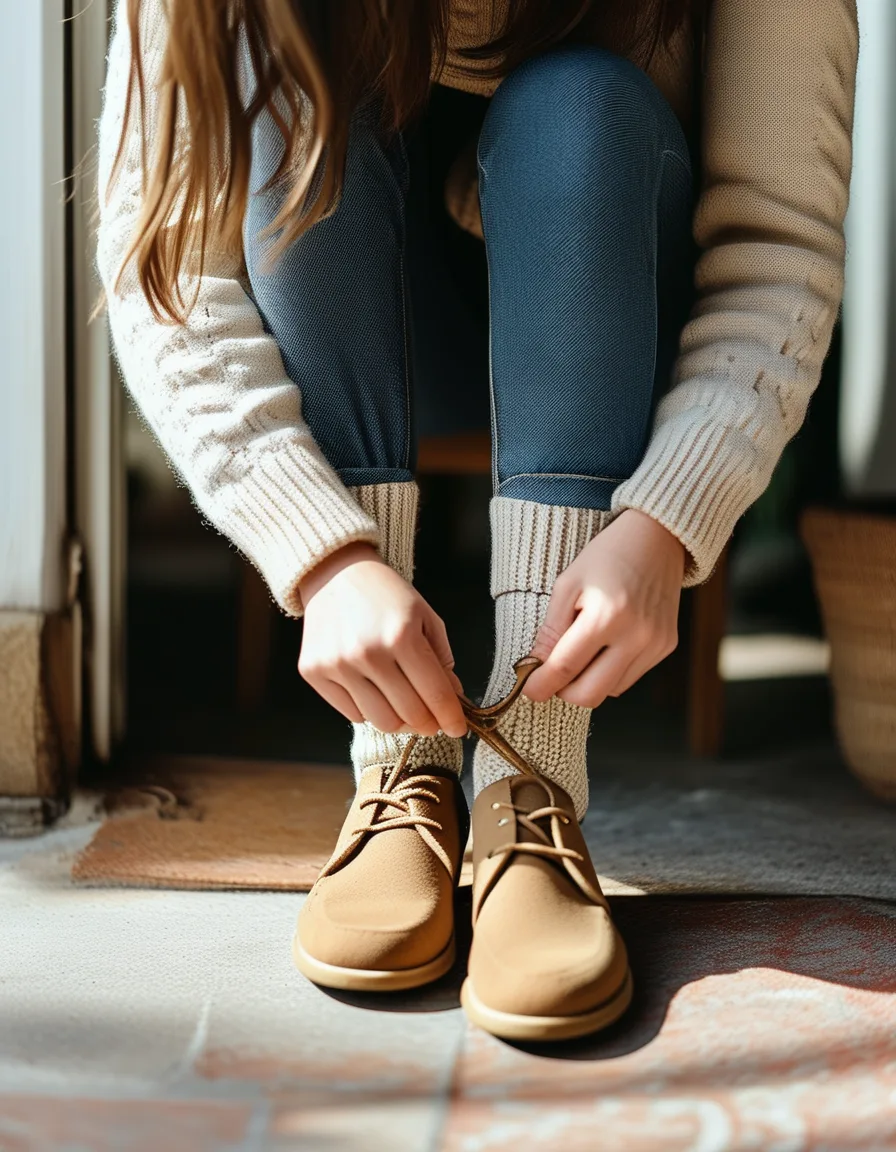
The practical approaches: the layer-with-wool-not-cotton (the wool socks retaining warmth even when damp, unlike cotton, making sock choice one of the highest-leverage warmth levers available within a barefoot-compatible shoe — the sock-fabric-choice-matters-more-than-people-assume), the the-seek-out-wide-toe-box-winter-specific-options (the small but growing category of barefoot-brand winter boots that preserve toe splay while adding real insulation, worth the search even though options are limited — the the-category-exists-its-just-smaller), the the-accept-a-slightly-less-minimal-shoe-for-genuinely-cold-days (the choosing a warmer, less minimal option on the coldest days rather than forcing a summer-style shoe into conditions it wasn’t built for, and returning to minimal shoes as conditions allow — the match-the-shoe-to-the-actual-day-not-a-fixed-philosophy), the the-waterproof-first-insulate-second (the prioritizing keeping feet dry over maximizing insulation thickness, since wet cold is the more urgent problem in most real winter scenarios — the dry-feet-tolerate-cold-better-than-wet-warm-feet-tolerate-water), the the-keep-moving-to-generate-heat (the planning routes and activities that keep feet actively moving rather than standing still in cold conditions, extending how minimal a shoe can realistically stay — the activity-level-is-a-real-warmth-lever-not-just-gear), and the frame (the practical winter approach as wool socks, seeking the small but real wide-toe-box winter category, accepting a warmer shoe on the truly cold days, prioritizing dry over maximally thin, and using activity level itself as a warmth strategy — barefoot philosophy adapted to winter rather than either abandoned or forced past its actual limits).
Barefoot shoes hit a genuine structural conflict in cold weather — the thin sole and minimal upper material that define the category are the same features that limit insulation, wind blocking and moisture barrier, and most mainstream winter boots solve warmth with a narrow toe box, stiff sole and elevated heel that undo exactly what barefoot shoes are meant to preserve. There’s no option that fully escapes the tradeoff between warmth and ground feel, and the right balance shifts with activity level, whether conditions are wet or dry, and how long the exposure actually lasts. The practical approach is layering with wool rather than cotton socks since wool holds warmth even when damp, seeking out the small but growing category of wide-toe-box winter-specific barefoot boots, accepting a warmer, less minimal shoe on the genuinely coldest days rather than forcing a summer shoe past its limits, prioritizing dry feet over maximum insulation thickness, and using continuous movement itself as a real warmth strategy. It’s an adaptation of the barefoot approach to winter, not an abandonment of it.
Keep Reading
This article is for general informational purposes only and is not medical advice. Always consult a qualified health professional for guidance specific to you.