Why Your Feet Hurt in the First Few Weeks of Barefoot Shoes (and When That's Normal)
Quick Answer: Mild arch, calf, or foot soreness in the first 2-4 weeks of barefoot shoes is a common, expected adaptation as your foot muscles take over work your old shoes’ support and cushioning used to do. Sharp pain, swelling, or pain that worsens past week 3-4 is different and warrants backing off.
Every review said barefoot shoes ‘feel amazing once you adjust,’ and right now your calves are tight and your arches ache after even a short walk. That gap between the promise and week one is real, and it’s mostly predictable.

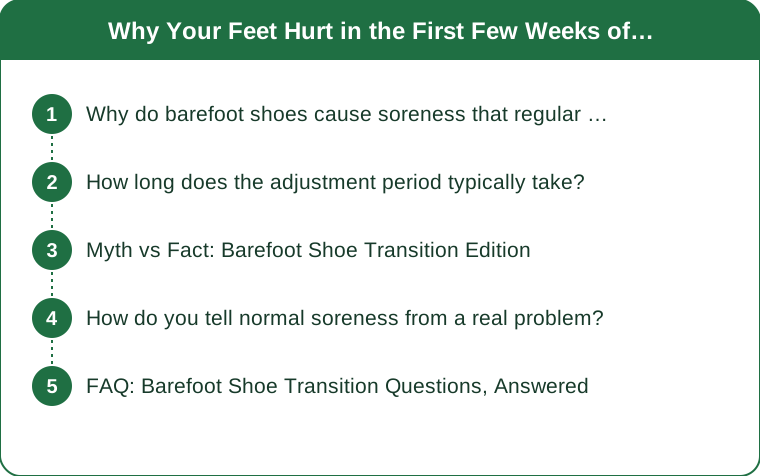
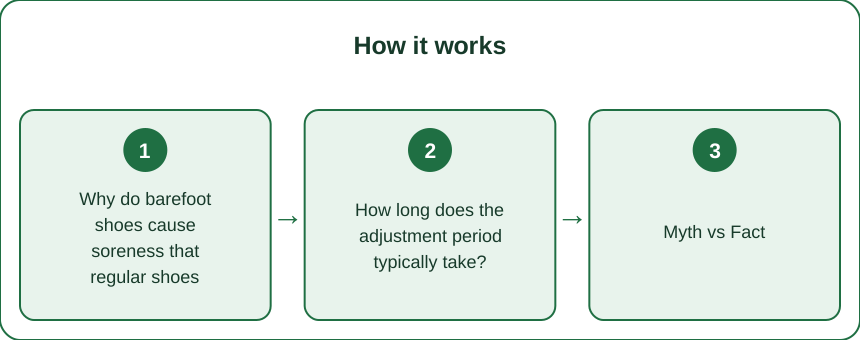
Why do barefoot shoes cause soreness that regular shoes don’t?
Cushioned, structured shoes do a meaningful amount of shock absorption and arch support work for your foot automatically. Barefoot shoes remove that support, which means muscles in your feet and calves that were underused start actually working, often for the first time in years.
That’s muscle adaptation soreness, similar to starting a new strength exercise — not a sign of injury by itself.
How long does the adjustment period typically take?
Most sources and podiatry guidance suggest a 4-8 week gradual transition, starting with short wear periods (30-60 minutes) and slowly extending, rather than switching over entirely on day one.
Calf and arch soreness commonly peaks around week 1-2 and tapers by week 4-6 for people following a gradual introduction — a much rockier transition, or one that skips the gradual phase-in, often lasts longer and hurts more.

Myth vs Fact: Barefoot Shoe Transition Edition
Myth: If it hurts, barefoot shoes aren’t for you. Fact: Mild, dull soreness that improves session to session is expected adaptation, not a sign of incompatibility.
Myth: You should switch to barefoot shoes full-time immediately for a faster transition. Fact: A too-fast transition is one of the most common causes of overuse injuries like plantar fasciitis flares — gradual works better and faster overall.
Myth: All minimalist shoes require the same transition timeline. Fact: Zero-drop, thin-sole shoes typically need a longer adaptation than shoes with moderate minimalism — check your specific shoe’s drop and stack height.
How do you tell normal soreness from a real problem?
Normal: dull, muscle-like soreness in arches or calves that improves within 24-48 hours and doesn’t worsen week over week. Concerning: sharp, localized pain (especially in the heel, top of foot, or Achilles), swelling, or pain that gets worse rather than better past the 3-4 week mark.
If you’re seeing the second pattern, scale back wear time significantly and consider a podiatrist or physical therapist check-in before continuing the transition.
FAQ: Barefoot Shoe Transition Questions, Answered
Should I do calf stretches during the transition?
Yes — regular calf and foot mobility work alongside the shoe transition commonly eases the adaptation soreness faster than the shoes alone.
Can I speed up the transition safely?
Somewhat, with consistent daily short wear rather than occasional long wear — but skipping the gradual phase-in tends to backfire with more, not less, discomfort.
Is barefoot shoe soreness different for runners versus walkers?
Runners typically need a longer, more conservative transition since running load on the foot is considerably higher than walking — many guides suggest walking-only for the first several weeks before any running in barefoot shoes.
TL;DR:
- Early soreness in barefoot shoes usually means foot and calf muscles are finally doing real work
- A 4-8 week gradual transition, starting with short wear periods, reduces both severity and duration
- Dull soreness that improves in 24-48 hours is normal; sharp or worsening pain is not
- Runners generally need a longer, more conservative transition than walkers
This is general information, not medical advice — persistent or worsening pain deserves a professional check-in.
Keep Reading
This article is for general informational purposes only and is not medical advice. Always consult a qualified health professional for guidance specific to you.