The Real Timeline for Foot Pain When Switching to Barefoot Shoes
Quick Answer: Mild foot and calf soreness in the first 2-4 weeks of transitioning to barefoot shoes is typical as muscles adapt, but sharp pain, pain that worsens rather than improves, or pain persisting past 6-8 weeks are signs to slow the transition or check with a professional.
Your feet ache after switching to barefoot shoes and you’re not sure if that’s the process working or a sign you’ve made a mistake. The distinction is mostly about trajectory, not just presence of discomfort.
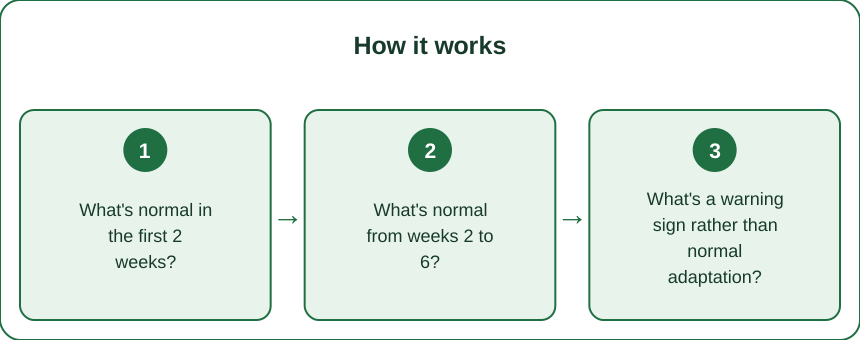
What’s normal in the first 2 weeks?
Mild soreness in the arches, calves, and sometimes the top of the foot is common as muscles that were supported by cushioned, structured shoes start doing more work themselves. This soreness typically feels similar to starting a new exercise — present, but improving session to session.
What’s normal from weeks 2 to 6?
Gradual improvement, not a straight line — some days feel better than others, but the overall trend across a couple of weeks should be toward less discomfort, not more, as your feet and lower legs build strength and adapt.

What’s a warning sign rather than normal adaptation?
Sharp, localized pain (especially in a specific spot rather than general muscle soreness), pain that’s getting worse week over week instead of better, or any pain that doesn’t ease with rest are signs to pause the transition and consider a professional evaluation, particularly to rule out stress-related injuries.
How should the transition actually be paced to avoid injury?
Most guidance suggests starting with short periods (30-60 minutes) of barefoot shoe wear and gradually increasing over several weeks, rather than switching to all-day wear immediately — the injuries that do happen with barefoot transitions are most often tied to too-fast pacing, not the shoes themselves.
FAQ: Barefoot Shoe Transition Pain, Answered
How long should a barefoot shoe transition take overall?
Many sources suggest 6-8 weeks minimum for a gradual, lower-injury-risk transition, longer if you’re also transitioning running mileage.
Is calf soreness worse than foot soreness during transition?
Both are common and generally treated the same way — monitor trajectory over time rather than judging by location alone.
Should I stop wearing barefoot shoes if pain doesn’t improve after a month?
If pain isn’t trending better after 4-6 weeks of a reasonably gradual transition, that’s a reasonable point to reassess pacing or consult a professional rather than continuing to push through.
TL;DR:
- Mild soreness in weeks 1-2 is a normal, expected part of the transition
- Overall trend should be improving by weeks 2-6, not worsening
- Sharp, localized, or worsening pain is a warning sign, not normal adaptation
- Pace the transition gradually — most transition injuries come from moving too fast, not the shoes themselves
This is general information, not medical advice — persistent or worsening pain deserves a professional check.
Keep Reading
This article is for general informational purposes only and is not medical advice. Always consult a qualified health professional for guidance specific to you.