How to Actually Wear Barefoot Shoes Through Cold Weather Without Giving Up the Benefits
Quick Answer: Toe socks or thin wool liner socks under barefoot shoes, choosing models with slightly thicker (but still flexible) winter-rated soles, and shortening cold-weather sessions rather than skipping them entirely lets barefoot training continue through winter without losing ground gained in warmer months.
The minimal sole that makes barefoot shoes work in summer is exactly what makes cold pavement feel brutal in winter, which pushes a lot of people to fully pause training until spring — usually an unnecessary tradeoff.

Why does cold weather feel so much harsher in barefoot shoes specifically?
Minimal, flexible soles conduct cold far more than a standard cushioned winter boot, since there’s less insulating material between your foot and the ground. This isn’t a flaw in the shoe — it’s the same design feature that provides ground feel and foot strength benefits in warmer weather.
The cold sensation itself isn’t harmful for short exposures, but it does need managing differently than warm-weather barefoot training.
What sock strategy actually works under barefoot shoes?
Merino wool toe socks or thin wool liner socks provide warmth without bulking up the fit the way a thick regular sock would, which barefoot shoes’ snug toe box often can’t accommodate. Wool specifically retains warmth even when slightly damp, unlike cotton.
Layering a thin wool liner under a slightly thicker wool sock, if the shoe’s fit allows room, adds more warmth for genuinely cold conditions without losing all ground feel.
Are there barefoot shoe models actually built for winter?
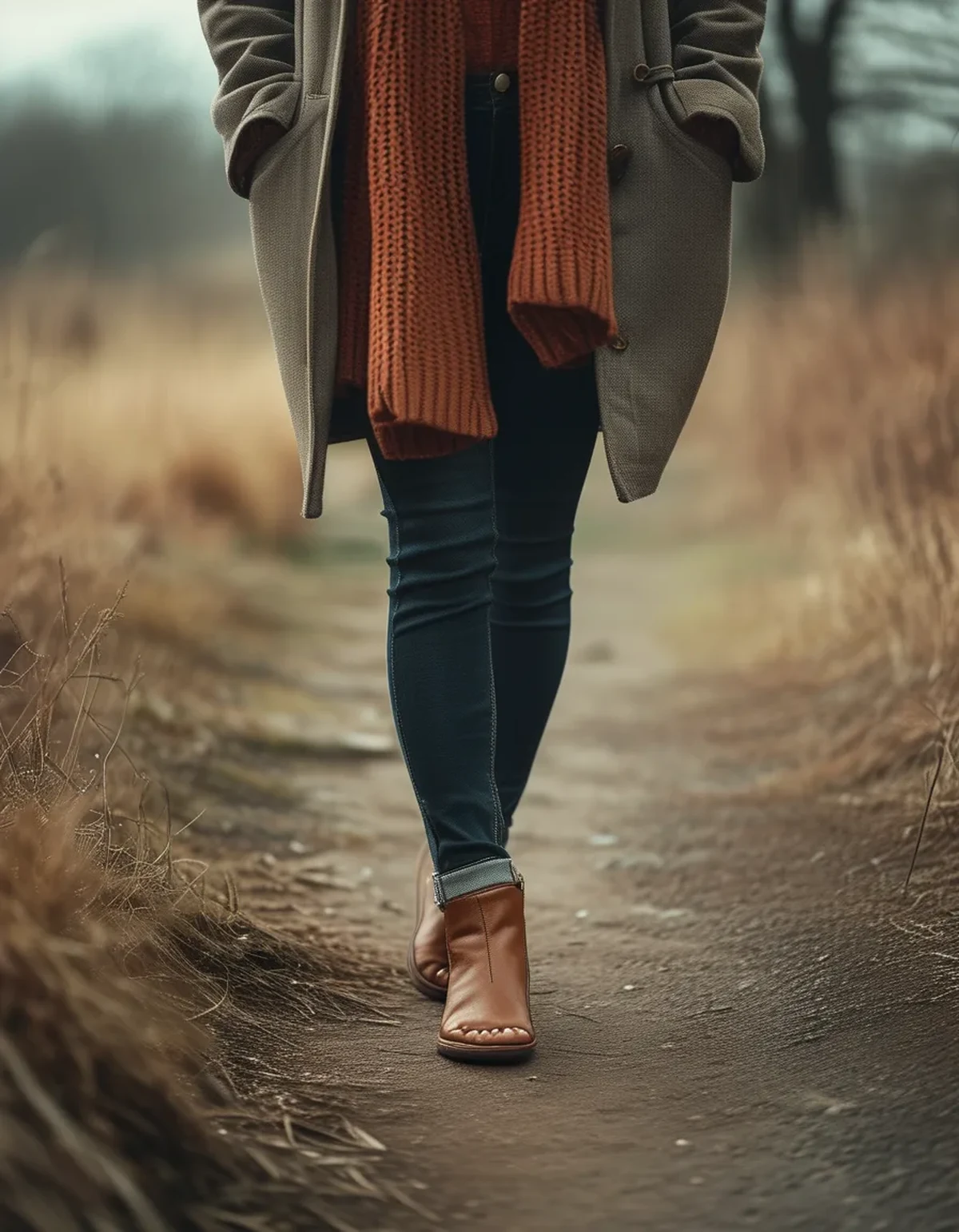
Yes — some brands offer winter-specific minimalist shoes with slightly thicker, insulated but still flexible soles, designed to retain more of the barefoot design principles (wide toe box, zero drop) while adding cold and wet weather protection. These aren’t identical to summer barefoot shoes but keep the core benefits.
This is a reasonable investment for anyone committed to year-round barefoot training in a genuinely cold climate, rather than trying to stretch summer shoes through winter.
Should cold-weather sessions be shortened?
Yes, especially early in winter while adapting — shorter, more frequent cold-exposure sessions let feet acclimate gradually rather than one long session in harsh cold. Many barefoot shoe wearers find genuine cold tolerance improves somewhat over a winter season with consistent, gradual exposure.
Watch for numbness beyond normal cold sensation — that’s a signal to end the session and warm up, not a benchmark to push through.
FAQ: Barefoot Shoes in Cold Weather Questions, Answered
Is it safe to wear barefoot shoes in snow or ice?
Traction varies significantly by model — check for a winter-rated or higher-traction sole specifically, since standard barefoot shoe soles aren’t all designed for icy conditions.
Do toes get frostbite risk faster in barefoot shoes than regular winter boots?
With proper wool socks and reasonable session length, risk is generally manageable for typical cold temperatures, but genuinely extreme cold calls for more insulated footwear regardless of barefoot training goals.
Is it necessary to fully stop barefoot training in winter?
No — most people can continue with sock adjustments, potentially a winter-specific model, and shorter sessions in the coldest stretches, rather than pausing training entirely until spring.
TL;DR:
- Minimal soles conduct cold more than cushioned boots — that’s the tradeoff for barefoot benefits
- Merino wool toe socks or thin liners add warmth without disrupting fit
- Winter-specific minimalist shoe models exist for committed year-round training
- Shorten sessions in harsh cold, especially while feet are still adapting
Barefoot training doesn’t need a winter pause — it needs a few adjustments to keep the same benefits going through the cold months.
Keep Reading
This article is for general informational purposes only and is not medical advice. Always consult a qualified health professional for guidance specific to you.