Barefoot Shoes: The Buying Guide for First-Timers
Buying your first barefoot shoes is a vocabulary test — zero drop, stack height, toe box — administered by an internet that’s 40% cult and 60% acronyms. The plain-language buying guide: the three specs that matter, the budget truth and the first-pair mistakes everyone makes once.

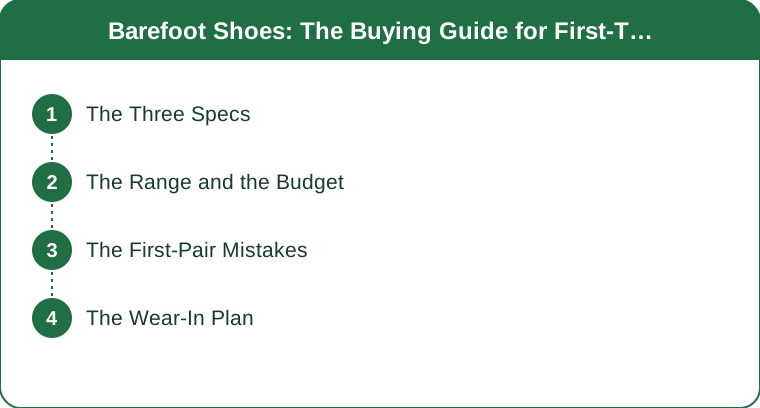
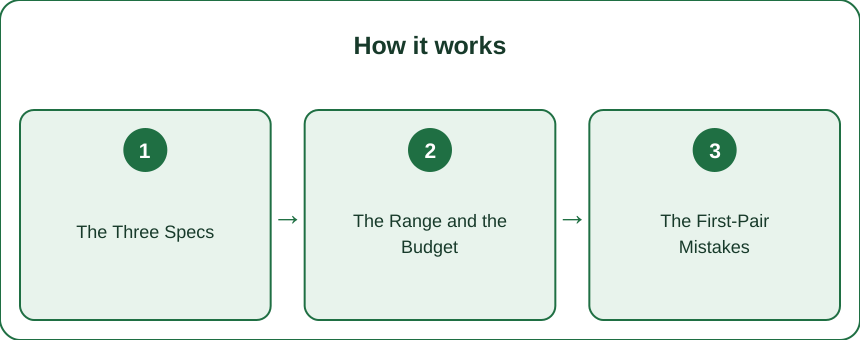
The Three Specs
The category’s definition: the wide toe box (foot-shaped, not shoe-shaped — toes splay flat inside; the spec that matters most and the easiest to check: pull the insole out and stand on it — toes overflowing means the shoe fails before it starts), zero drop (heel and forefoot at the same height — no wedge tilting you forward), and thin flexible soles (the ground-feel spec — the shoe should roll up or twist easily in your hands; stack heights of 4-10mm define the range from ‘barely there’ to ‘transitional’).
The Range and the Budget
The market map: the transitional tier (wide-box, low-drop, some cushion — the smartest first pair for most; your feet get the shape benefits while the padding cushions the adaptation), the true-minimalist tier (the glove-like classics — the destination, not the door), the barefoot-adjacent lifestyle tier (casual and dress styles that pass at offices — the category grew up), and the budget honesty (real options exist across prices; the fit specs matter more than the logo — the insole test is free at every price point).

The First-Pair Mistakes
The classics, pre-empted: buying minimalist and walking your old distances immediately (the transition-too-fast injury is the category’s whole reputation problem — the months-not-weeks rule from the barefoot-training world governs), sizing like normal shoes (barefoot shoes fit with MORE toe room than feels familiar — a thumb’s width; snug toes defeat the entire point), expecting arch support (there isn’t any; that’s the feature — but it means your first weeks are training, not just wearing), and going straight to running (walking first, for a long time; running in minimalist shoes is a separate, patient chapter).
The Wear-In Plan
The adaptation schedule: weeks 1-2 around the house and short errands (an hour or two daily — calves and feet will file reports; that’s adaptation, not error), weeks 3-6 extending to normal days with old-shoe backup in the bag (the swap-when-tired rule keeps it sustainable), the strength accompaniment (the toe-yoga and short-foot exercises accelerate everything — shoes change the environment; exercises build the tenant), and the two-shoe wardrobe truth (barefoot for walks and strength training, cushioned for long runs and big-mileage days — the mixed portfolio is the sane long game, not a compromise).
Insole test first, transitional tier to start, size roomy, months not weeks. The first barefoot pair is a training program disguised as a purchase — buy the door, not the destination.
Keep Reading
This article is for general informational purposes only and is not medical advice. Always consult a qualified health professional for guidance specific to you.