How to Transition to Barefoot Shoes Without Wrecking Your Feet
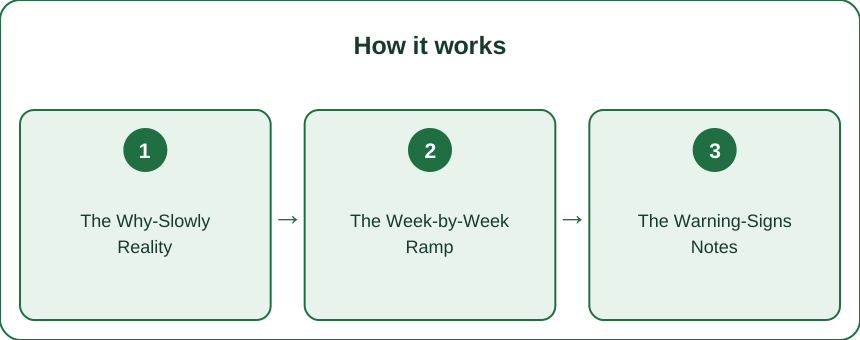
The most common barefoot-shoe mistake is treating them like regular shoes — going all-in overnight and ending up with sore, injured feet that convince you the whole thing was a scam. It wasn’t; the transition was. The guide: why you must go slow, the week-by-week ramp and the warning signs to heed along the way.

The Why-Slowly Reality
The transition that can’t be rushed: the atrophied-feet truth (the decades in cushioned, supportive shoes leaving the foot muscles weak — the feet that must be REBUILT, not just unleashed; the buying-guide chapter’s honesty), the load-shift reality (the barefoot shoes moving the work to the feet, calves and Achilles — the tissues that need time to adapt; the too-much-too-soon injury), the common-injury list (the sore feet, the calf strain, the Achilles-and-plantar issues from rushing — the transition-injuries that get blamed on the shoes; the your-fault-not-the-shoe’s honesty), the individual-timeline variation (the weeks-to-months transition that varies by foot — the no-fixed-schedule; the listen-to-your-feet principle), and the it’s-worth-it-if-done-right frame (the stronger, more-functional feet as the payoff — the barefoot-training chapter’s promise, protected by patience).

The Week-by-Week Ramp
The gradual progression: the foot-strengthening-first phase (the toe-spreading, the short-foot, the calf-raises from the foot-strength chapter — the prep-work that precedes and accompanies the shoes; the build-the-base), the start-small habit (the barefoot shoes worn for short periods first — the hour-a-day beginning; the around-the-house easing), the gradual-time-increase (the slowly-lengthening wear as the feet adapt — the add-time-not-all-at-once; the weeks-long ramp), the low-impact-before-high rule (the walking-in-them before running-in-them — the earn-the-impact; the don’t-run-barefoot-day-one), the surface-progression (the flat-and-easy before the varied-and-demanding — the graded terrain), the keep-the-old-shoes-around note (the rotate-with-regular-shoes during transition — the not-all-or-nothing; the ease-the-load), and the patience-over-months frame (the full transition measured in months — the trust-the-slow-process; the feet-rebuilt-gradually).
The Warning-Signs Notes
Reading your feet along the way: the good-soreness-vs-bad-pain distinction (the mild-muscle-soreness that’s normal versus the sharp-or-joint pain that’s a stop-signal — the pain-as-guide from the training chapters), the back-off-when-it-hurts rule (the reduce-the-time-or-impact when the feet complain — the responsive-adjustment; the swap-not-push), the specific-red-flags (the persistent Achilles pain, the plantar-fascia flare, the stress-reaction signs — the see-someone signals; the don’t-power-through-these), the calf-tightness-management (the stretch-and-mobilize the loaded calves — the Achilles-care during transition; the ease-the-adaptation), the it’s-okay-to-slow-down permission (the extend-the-timeline if the feet need it — the no-rush-no-ego; the individual-pace respect), and the frame (the barefoot-shoe transition as a slow, foot-strengthening, warning-sign-heeding process — the weeks-to-months ramp that rebuilds the feet safely; the transition done right so the shoes get the fair trial). Strengthen first, ramp slowly, heed the pain: the feet, transitioned safely.
The barefoot-shoe transition can’t be rushed — decades in cushioned shoes left your feet weak, and going all-in overnight injures them. Strengthen the feet first, start with short wear, ramp over weeks-to-months, walk before you run, and heed sharp pain. Done slowly, you get stronger feet; done fast, you blame the shoes.
Keep Reading
This article is for general informational purposes only and is not medical advice. Always consult a qualified health professional for guidance specific to you.